Lunar calendar & solar terms
The whole date, not just the date.
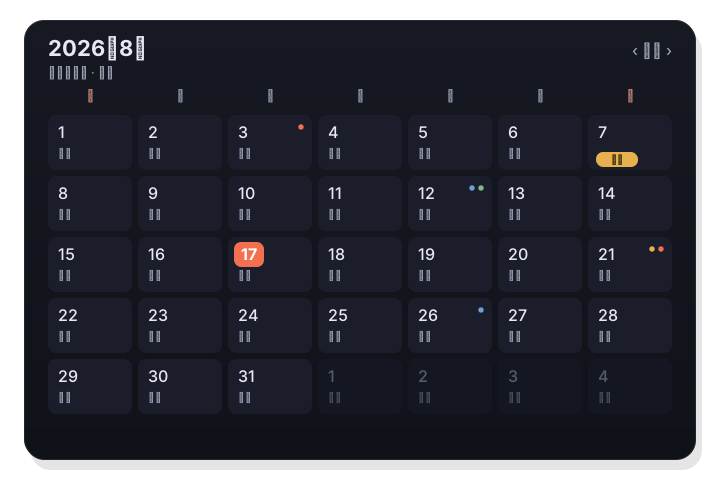
Every day carries its lunar date, and the 24 solar terms and traditional festivals sit right on the calendar. Scroll smoothly through the months, and tap any day for its details, events, and tasks.
Lunar conversion and solar terms are computed offline — no network needed.
How it works
- 1
Open the panel
Click the menu-bar title — like 7/13 周一 廿九 — and the panel drops down, centered under the status item.
- 2
Scroll the months
Drag to scroll 1:1 and stop wherever you like, or flick with the trackpad to glide and snap to a month. The ‹ › arrows jump a whole month.
- 3
Read the day
Every cell shows the Gregorian and lunar date, with solar terms and festivals inline. Select a day for its full details, events, and tasks.
Lunar dates, solar terms, and festivals
LiLi Cal computes the lunar calendar with Foundation's Chinese calendar and the Shouxing solar-term formula, so 农历 dates, the 24 节气, and traditional festivals are always in place — offline, on any day, past or future.
- 农历 date on every day, plus 干支 and zodiac details on selection
- The 24 solar terms, aligned to authoritative values
- Traditional festivals like 除夕, 端午, and 中秋
A calendar that scrolls like paper
The month view is a continuous scroll, not a flip. Drag it 1:1 and it follows your finger; flick it and it glides, then snaps cleanly to a month. The title updates the year and month live as you move.
- Press-and-drag for 1:1, follow-your-finger scrolling
- Flick to glide, with month snapping on release
- Jump to any year and month from the title picker
Good to know
- Lunar engine
- Foundation Chinese calendar + Shouxing formula, offline
- Solar terms
- All 24, aligned to authoritative 2024–2026 values
- Festivals
- Traditional Chinese festivals on the calendar
- Scrolling
- 1:1 drag, flick-to-snap, month jump
- Lunar toggle
- Hide the lunar layer for a plain Gregorian view
- Network
- None required for lunar or solar-term data