Guide
How China's 调休 works, and why calendars get it wrong
China's statutory holidays come with make-up workdays, where a weekend is reassigned as a working day to extend a break. Generic calendars usually miss this, which is why 调休-aware apps matter.
Key takeaways
- 调休 shifts weekends to create longer holiday breaks and adds make-up workdays.
- Generic calendars mark the holiday but miss the weekend you actually have to work.
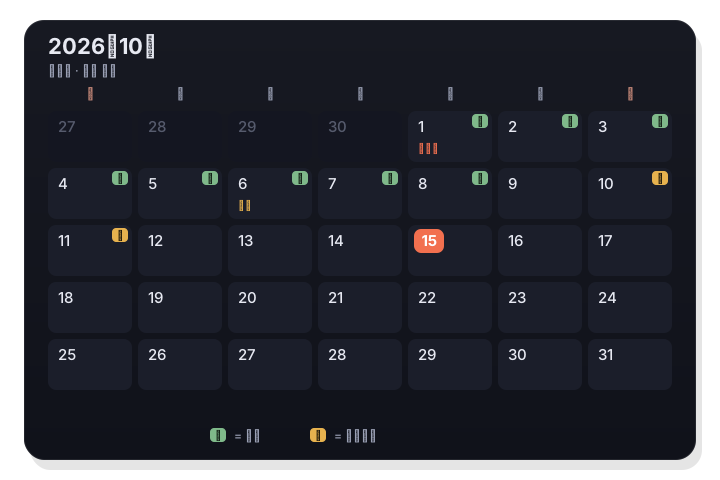
- LiLi Cal badges days off with 休 and make-up workdays with 班.
What 调休 actually is
For major holidays, official arrangements often extend a break by borrowing from nearby weekends. The result is a longer holiday, but one or two weekend days become working days to compensate. That combination of extra days off and make-up workdays is what 调休 refers to.
- Holidays are extended by shifting weekends.
- One or two weekend days become working days.
- The net effect is a longer continuous break.
Why generic calendars get it wrong
Most calendar apps treat a holiday as a single flag on a day. They can show that a date is a public holiday, but they rarely encode that the Saturday before it is now a working day. That gap is exactly where people get caught out, showing up to a make-up workday they did not expect.
- A holiday flag does not capture make-up workdays.
- The reassigned weekend often goes unmarked.
- This is the most common source of confusion.
How LiLi Cal shows it
LiLi Cal encodes both sides of 调休 directly on the calendar. Days off carry a 休 badge and make-up workdays carry a 班 badge, using the open-source holiday-cn dataset with a bundled 2026 fallback and online updates. Hong Kong public holidays are built in as well.
- 休 for days off, 班 for make-up workdays.
- Data from the MIT-licensed holiday-cn dataset.
- Bundled 2026 fallback plus online updates.
Frequently asked questions
Why do I have to work on a Saturday sometimes?
That is a make-up workday from 调休: a weekend reassigned as a working day to compensate for an extended holiday. LiLi Cal marks these with a 班 badge.
How does LiLi Cal keep make-up workdays accurate?
It uses the open-source holiday-cn dataset with a bundled 2026 fallback and incremental online updates, so future adjustments stay current.